- As we may think
- Posts
- From Scattered Data to a Shareable App: The Memex Web Workflow
From Scattered Data to a Shareable App: The Memex Web Workflow

The Memex Team
February 03, 2026
Most analytics work doesn’t fail because the question is hard. It fails because the data is scattered—and the “setup” starts to take over.
One table is in your warehouse. Another dataset is a file someone exports. A third lives in a doc. Before you’ve answered anything, you’re already doing glue work: downloading, reformatting, writing quick scripts, chasing permissions, installing packages, and hoping your environment doesn’t break.
Memex Web is built to make that workflow feel normal: connect sources, ask the question once, and get a real app you can share.
In the video, we show a concrete example: joining a BigQuery table with a CSV uploaded from a laptop. But the same pattern applies any time your inputs are split.

What you do (step-by-step)
1) Connect your warehouse data
Add a connector (BigQuery in the demo) by following the instructions in the app. We have detailed step-by-steps to make it super simple.
2) Add the “extra” dataset
Upload a CSV (or connect another source). This is often the reality: the latest export, a one-off list, a mapping file, or a small lookup table.
3) Ask for analysis across both
Example prompt:
“Join the BigQuery customer table with the uploaded support_tickets.csv, then analyze retention by ticket volume, and visualize the result.
From there, Memex handles the heavy lifting: it inspects schemas, figures out join logic, writes the queries/code, and builds the analysis flow end-to-end.
4) Review the app
This part matters more than people think: once you start blending sources, the analysis has to run somewhere.
Memex runs your app on managed, serverless compute—so you don’t set up environments, install dependencies, or worry about scaling. The joins and transformations aren’t happening “in the browser.” They run on real compute that can handle larger workloads and longer-running analyses.
That’s a key difference from a lot of app builders where the logic is mostly client-side and you hit limits fast.
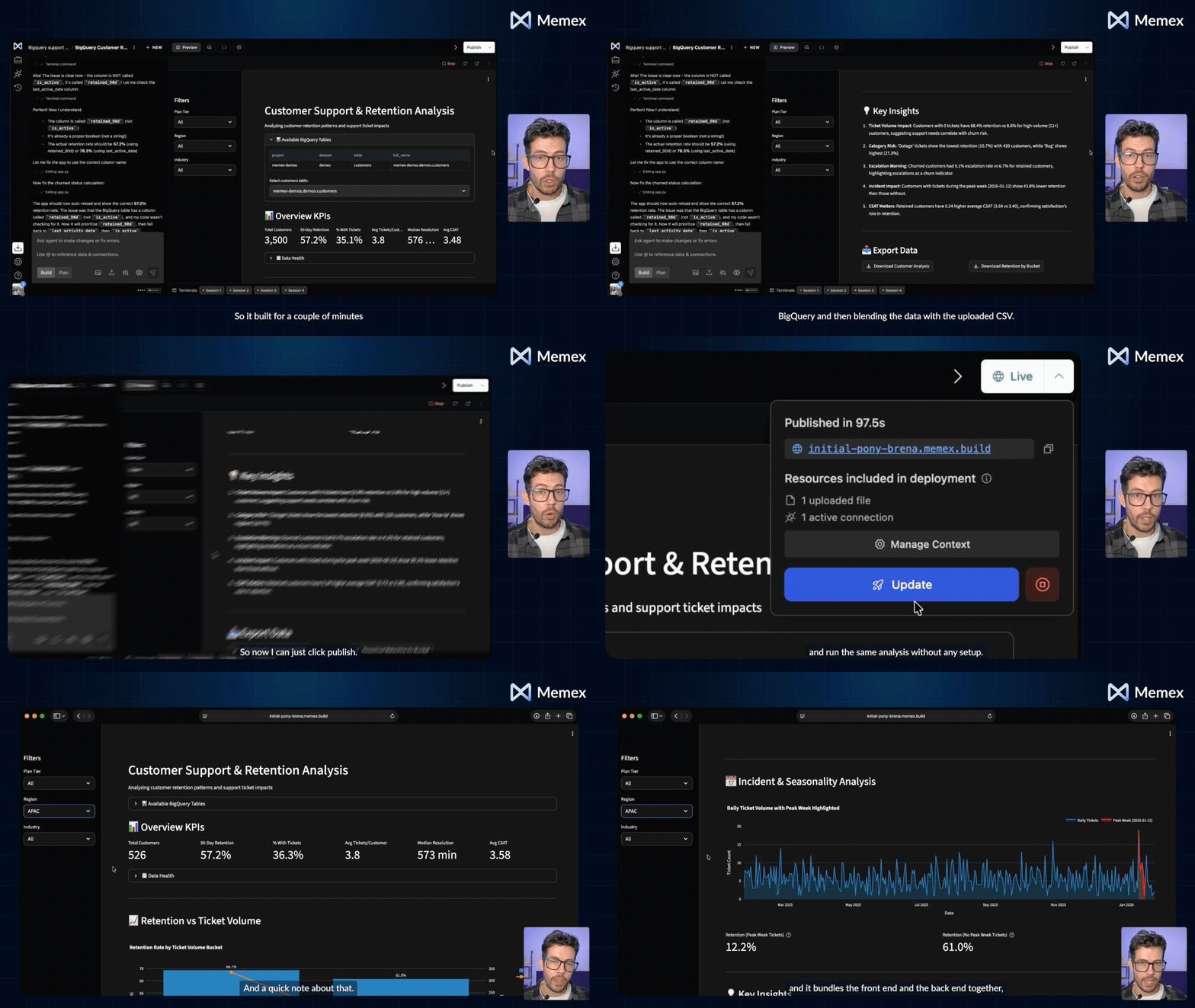
5) Publish it so others can actually use it
When the app looks right, click Publish. Now it’s not just a front-end someone can view—it’s a live app others can open, filter, and interact with. And because the app runs on serverless compute, teammates can re-run the analysis as they change inputs and filters, without needing your setup or recreating your environment.
If you regularly deal with “warehouse + file + one-off request,” this workflow is what Memex Web is designed for.
If you haven’t yet, try Memex Web for free today! And if you want to talk through what you're trying to create, join us on Discord.